
Hikes, Beaches, Lemurs & the Trip That Changed Everything
A rough-and-ready adventure through one of the most biodiverse and breathtaking countries on the planet.
Why Madagascar?
All I want to do is travel. Learn new cultures, try new foods, meet new people, and see this beautiful earth we call home. And with that mindset, Madagascar felt like the ultimate destination a place so unique, so untouched, so wildly different from anywhere else, that people call it the eighth continent.
Madagascar is one of the most if not the most biodiverse countries in the world. A staggering 90% of its wildlife, plant life, and ecosystems are endemic, meaning they exist nowhere else on earth. Mountains, jungle, forest, beaches the terrain shifts so dramatically as you move across the island that it genuinely looks like a different country every few hours. Madagascar truly has everything.
But let me be upfront: this was not a luxury vacation. This was a travel trip rough and ready, adventurous, and deeply rewarding. If you're looking for five-star glamour, this probably isn't the vlog or blog for you. But if you want something that will genuinely change the way you see the world? Keep reading.
How to Plan a Trip to Madagascar
Madagascar is not somewhere you should try to navigate solo. The roads are extremely challenging, the country is vast, and getting around requires local knowledge. We hired a company called Mora Travel, who planned our entire two-week itinerary from top to bottom. All we had to do was book our own international flights. They were great at communication and organisation though I will say, triple-check your itinerary when you receive it, because we did hit a few hiccups. Everything smoothed out, but the heads-up is worth having.
A few practical things to know before you go:
✈️ Flights: We flew from Paris on Air France currently the main direct option into Antananarivo, the capital.
💉 Health: No required vaccines for US citizens, but malaria pills are strongly recommended. Order them in advance from an online clinic they need to be started before you arrive.
🛂 Visa: Visas are granted on arrival. For stays under 15 days it's €10; over 15 days is €35. Fast, easy, done in minutes.
💵 Cash: Get local currency (Malagasy ariary) from the ATM at the airport. We withdrew about $500 USD equivalent and it lasted the full two weeks.
📱 Service: Get an eSIM through the Airalo app before you leave but be warned, service across Madagascar is very spotty. You will largely be disconnected. Embrace it.
🔌 Plugs: European plug standard. Bring an adapter.
🗣️ Language: Malagasy is the national language, French is second. English is rare. A guide is essential. Key phrases: Salama (hello) and Misaotra (thank you).
🎽 Packing: Light, breathable clothing for the days, but bring sweaters and a hoodie for evenings especially in the highlands where it gets genuinely cold. Lots of athletic wear, comfortable shoes, and swimwear are essential.
Getting There: London → Paris → Antananarivo
The journey started in London, where we caught the Eurostar to Paris a fast, smooth train ride, though ours was delayed and they cancelled food service, which, for a premium ticket, was not the move. We overnighted in Paris at Hotel Dell before a 10-hour and 10-minute Air France flight to Antananarivo.
We landed at midnight, moved through immigration in about five minutes (the visa process is genuinely that quick), and got picked up by our pre-arranged driver. An eventful first night we were briefly stopped by police doing checks on the road, which was a little unexpected, but we were waved through with no issue. Just something to be aware of as a heads-up.
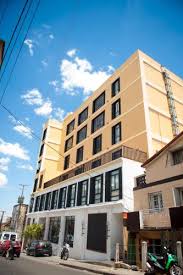
We checked into the Grand Hotel Urban in the capital for literally three hours just enough time to shower and rest before heading straight back to the domestic airport to catch our 5am flight to Nosy Be.
Stop 1: Nosy Be Island Paradise & First Lemur Encounters
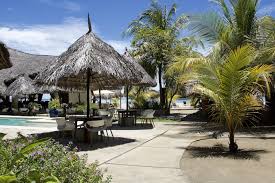
Nosy Be is a stunning island on the northwest coast of Madagascar and the perfect way to ease into the trip before things got really adventurous. We stayed at the Anjajavy Beach, a beautiful property right on the water with rustic bungalows set among gorgeous grounds. The hotel restaurant served all meals, which was ideal given how remote things get.
Hiking Nosy Komba & the Black Lemur Sanctuary
We didn't waste any time. Our tour guides were waiting the moment we dropped our bags. We jumped straight into gear and took a 30-minute boat ride to Nosy Komba a nearby island where we hiked up 622 metres through lush, dense jungle vegetation. This ended up being one of the absolute highlights of the entire trip.
The hike was steep and intense at points, but what made it so special was moving through actual villages along the mountain locals going about their daily lives among the trees. Our guide showed us jackfruit growing wild, white pepper on the vine, fresh ginger to taste, and a local plant called cola that acts as a natural stimulant (legal in Madagascar, not so much back home). We also came across a large non-venomous snake along the trail beautiful and, once confirmed harmless, genuinely cool to see up close.
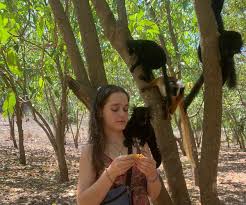
At the top, we visited the Black Lemur Sanctuary the only place in the world where black lemurs can be found. Watching them interact, take food from our hands, and move through the trees so confidently was something I'll never forget. We also tried Malagasy beer. It wasn't for me, but points for the experience.
Nosy Iranja: The Most Beautiful Beach in Madagascar
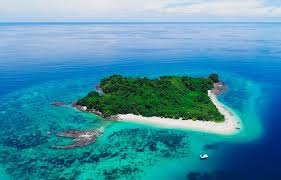
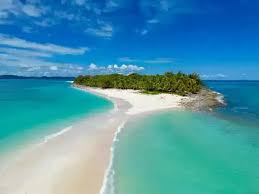
The next day we took a one-hour boat ride out to Nosy Iranja and I genuinely struggle to describe how beautiful it was. It reminded me of the Maldives, but wilder and more alive. Nosy Iranja is actually two islands connected by a sandbank that only appears at low tide when the water pulls back, you can walk across to the other island. When the tide is up, they look completely separate. We timed it perfectly and made the walk.
Lunch was served right on the beach rice, fish, crab, shrimp, and little skewers of meat. Fresh Malagasy rum called Tropic Punch Cocoa made the rounds sweet, strong, somewhere between Malibu and Bailey's with a horchata vibe. The food was fantastic. If you come to Madagascar, Nosy Be and specifically Nosy Iranja are non-negotiable stops.
Going Inland: The Adventure Gets Serious
After the beauty of Nosy Be, we flew back to Antananarivo and met our guide and driver, Mr. Joselyn, who would be with us for the rest of the inland journey. From this point on, the trip shifted into full adventure mode long drives across difficult roads, national parks, and landscapes that felt like another planet.
Antsirabe: A Stopover Worth Seeing
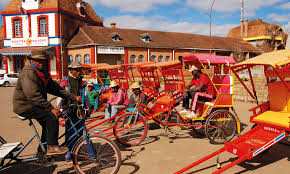
Our first stop was Antsirabe, about five hours from the capital (the roads add time to everything here factor that in). It was a brief stopover with no major plans, but driving through the town and watching local life was genuinely interesting. We watched children running a manual ferris wheel in the street spinning it by hand just for the fun of it. One of those small, unexpectedly joyful moments that stay with you.
Ranomafana National Park: Night Walk & Mouse Lemurs
An eight-hour drive brought us to Ranomafana, and it was worth every kilometre. This national park was created in 1991 after researchers discovered the golden bamboo lemur here in 1986 a species found nowhere else. The park is home to 12 lemur species, including the incredibly rare mouse lemur: tiny, nocturnal, and notoriously difficult to spot.
We started with a night walk along the roadside near the park boundary. It's not technically a hike you're standing along the road with your guide but what you see is remarkable. We found chameleons clinging to branches in the dark, their tiny pincer-hands gripping the twigs, eyes rotating independently. And then we spotted the mouse lemur. Seeing it made the whole journey feel complete. It's rare, it's tiny, and it is undeniably the star of the show.
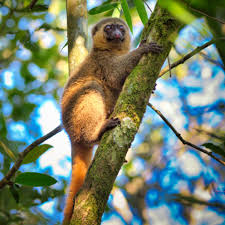
The following morning we went back into the park for a proper two-hour daytime trek. Our guide walked us through the bamboo forest, pointing out species and sharing the park's conservation history. We saw the golden bamboo lemur, several other lemur species, and endless birds a birdwatcher's paradise if that's your thing. I hit my head on branches approximately one million times. The trail demands your eyes go up and down simultaneously, which I have not yet mastered.
Isalo National Park: Canyons, Natural Pools & the Best Hotel of the Trip
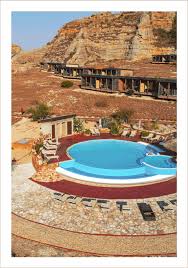
Another long drive seven to eight hours brought us to Ranohira, where we stayed at the Isalo Rock Lodge. After the rustic bungalows and modest rooms of earlier stops, this was a genuine upgrade. Beautiful, luxurious, set against dramatic rocky landscape. It was the one splash of luxury on the whole trip and we savoured every second of it.
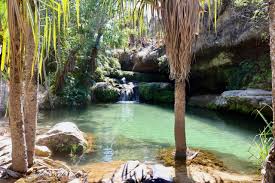
The following day was an all-day hike through Isalo National Park canyons, dramatic rock formations, and some of the most jaw-dropping scenery of the entire trip. Halfway through, we stumbled upon something extraordinary: a natural pool sitting in the middle of the canyon, with crystal clear water. People were swimming, the sun was out, and the setting was completely surreal.
We had packed swimwear (do the same), but the water was absolutely freezing ice cold, not refreshing cold. I lasted about ten seconds. During our lunch break on the trail, a lemur appeared and sat right with us, clearly very familiar with humans and very interested in our food. Wild animals that just join you for lunch. That's Madagascar.
Final Stop: Anakao & Whale Watching to Close It Out
After a seven-hour drive to Tuléar (another beautiful stopover hotel, and notably the only place with Wi-Fi in the room), we took a boat to Anakao our final destination. The boat couldn't reach the dock because the tide had gone out, so we loaded into a tractor and drove across the sand flat to reach the boat. Madagascar keeps things interesting.
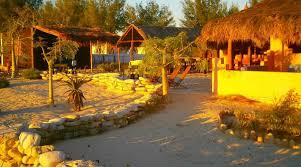
Anakao is beautiful, but if I'm being honest, I'd say three days there was longer than necessary. There isn't a huge amount to do compared to other parts of the itinerary. If you're planning your own trip, I'd recommend spending more time in Nosy Be instead and maybe doing just one or two nights here. That said, the property at Prince Anakao was lovely, right on the beach, and we used the time to genuinely relax.
Whale Watching: The Unexpected Highlight
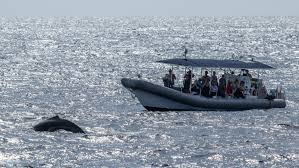
On our last morning in Anakao and of the entire trip we went whale watching at 7am. I almost skipped it. I was exhausted and the early start felt brutal. I went anyway, and I am so grateful I did. These humpback whales were surfacing maybe 20 feet from the boat. Giants. Just coming up out of the water right in front of us. I had never seen a whale in person before, and this was the most powerful way to do it for the first time.
After that, we headed home. Two weeks in Madagascar, done.
Final Thoughts: Should You Go to Madagascar?
Yes. Absolutely yes with the right expectations. This is not a trip for people who want comfort, convenience, and five-star hotels around every corner. The roads are rough. The service is slow. The Wi-Fi is mostly nonexistent. You will be tired almost every night.
But what you get in return is something that very few destinations can offer. Biodiversity unlike anything else on earth. Landscapes that shift from jungle to canyon to beach in a single day. Animals that exist nowhere else in the world. Villages where life moves at a completely different pace. A country so unique it deserves its own continent.
If you love nature, wildlife, and travel that genuinely expands your worldview Madagascar belongs on your list. Probably one of the best trips I have ever taken.
Quick Itinerary Snapshot
📍 Nosy Be: Island base, Nosy Komba hike & black lemur sanctuary, Nosy Iranja beach day. Must-do.
📍 Antananarivo: Capital city, mostly a transit hub. Quick overnight only.
📍 Antsirabe: Stopover town on the route south. Worth a quick look around.
📍 Ranomafana: National park, night walk for mouse lemurs & chameleons, daytime jungle hike. Do not skip.
📍 Ranohira / Isalo: Full day canyon hike, natural pools, Isalo Rock Lodge. Best hotel of the trip.
📍 Anakao: Beach relaxation and whale watching. Beautiful but limited activities1-2 nights is enough.
Madagascar, you are one of a kind. I am so grateful to have experienced you the way that I did. For the nature lovers, the curious souls, the travellers who want something real this one's for you.